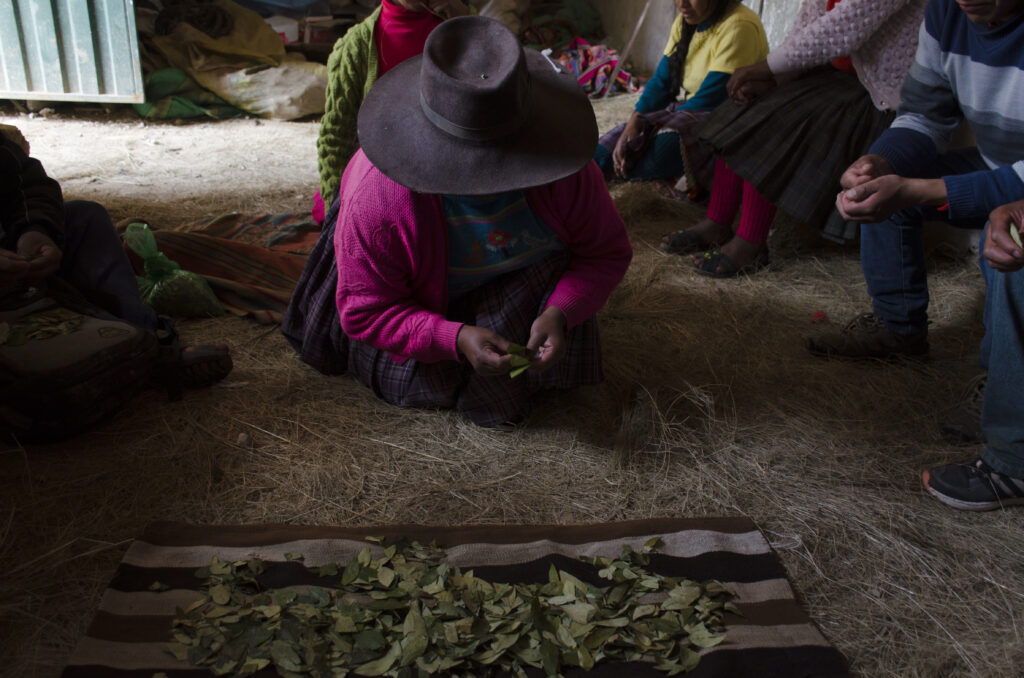
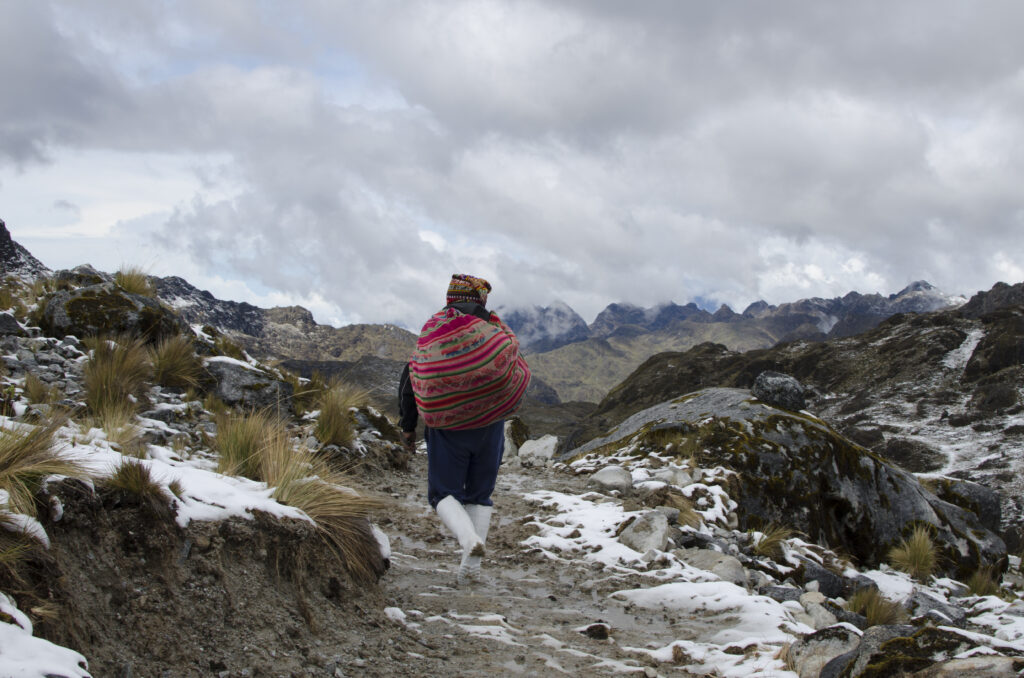
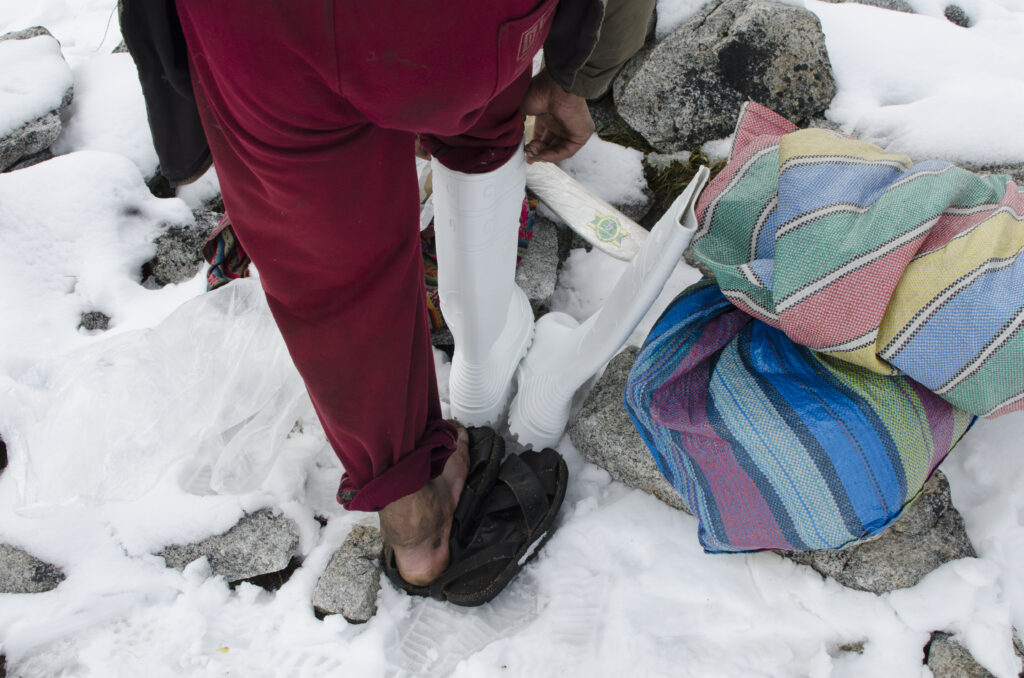
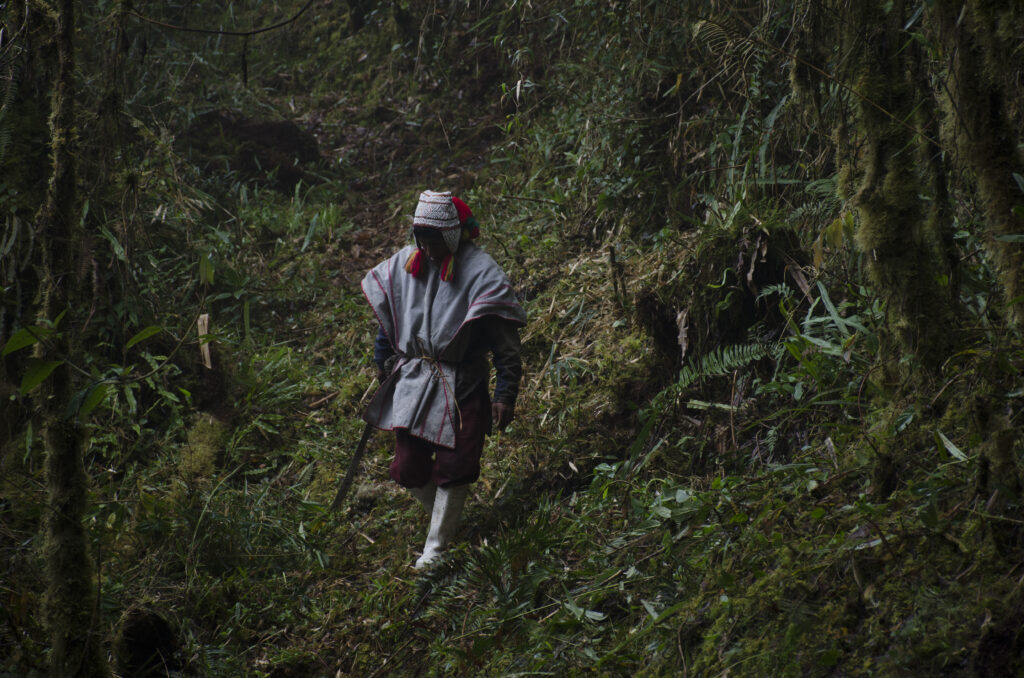
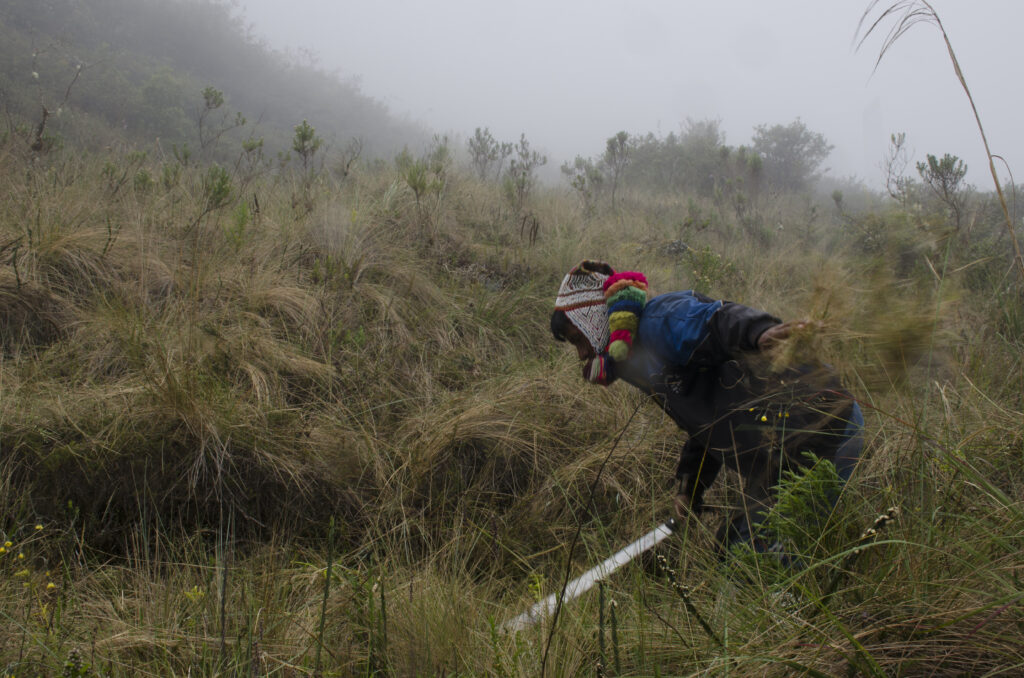
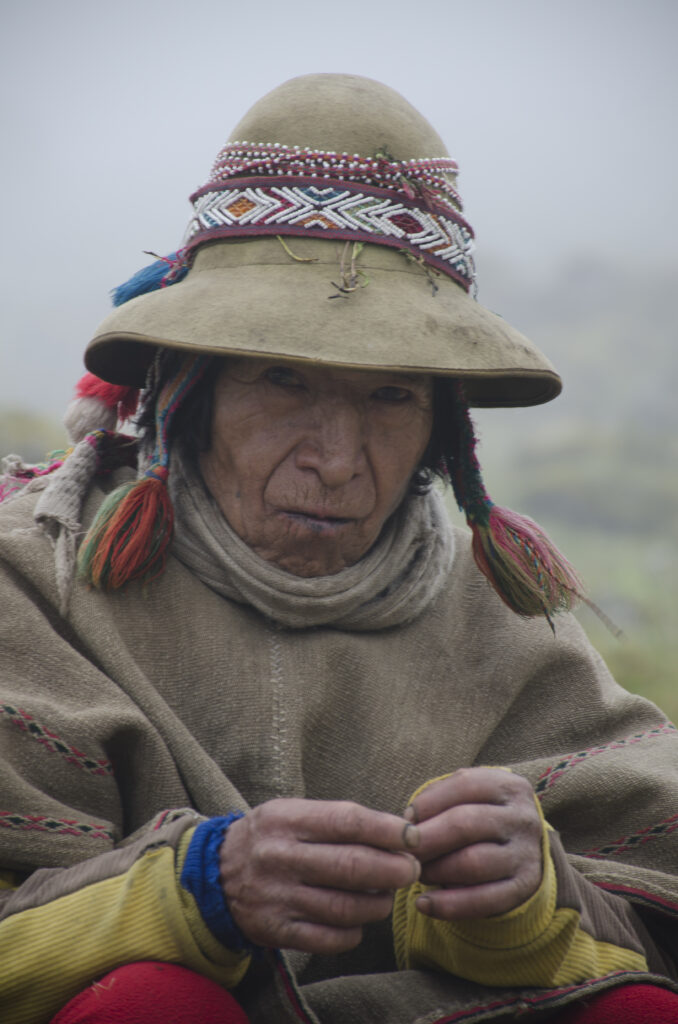
El proyecto consta de un trabajo fotográfico de la construcción del Camino Ancestral del maíz. Este camino permitirá el acceso de los integrantes de la comunidad Q´ero a la Selva Alta donde se procurara la revitalización de las tradiciones ya abandonadas por la dificultad que significa el traslado hacia el sector. Ancestralmente el contacto con estas prácticas significa una relación directa con los dioses, un contacto directo además con el quehacer y su espiritualidad, motivo por el cual “los hijos legítimos del sol”, como se conoce a esta nación, obtuvo el titulo de patrimonio cultural del Perú. .
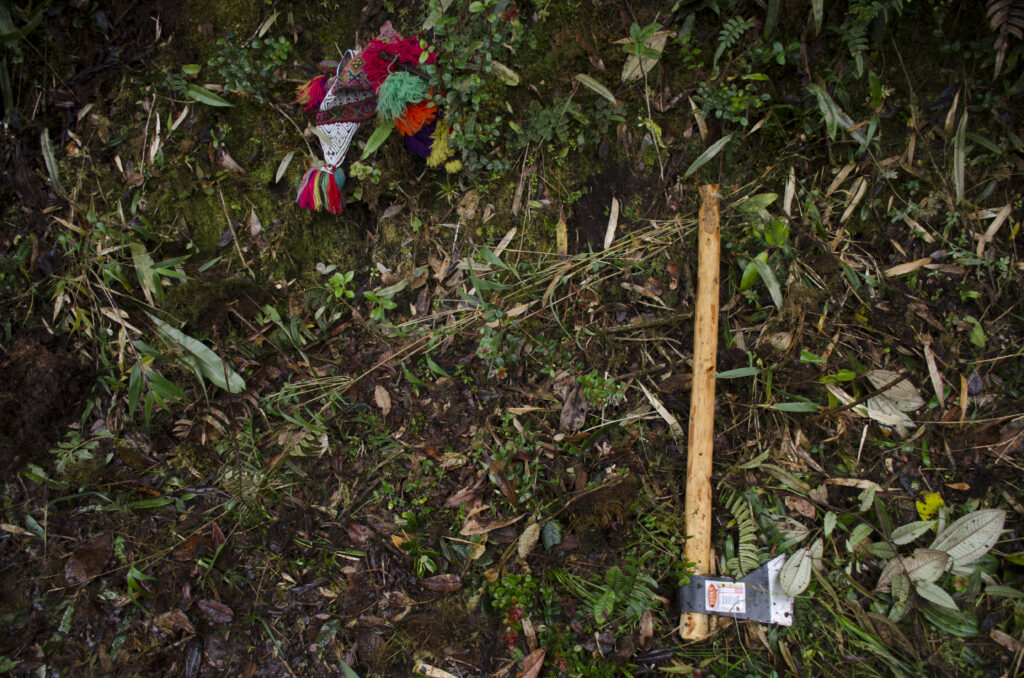
Actualmente, el camino de acceso a la Selva alta está invadido por la naturaleza y cerrado por el avance del monte debido al poco uso de los comuneros, lo que dificulta aún mas la conservación del rito, además de la migración de los abuelos que por búsqueda de mejor educación para sus nietos deshabitaron el lugar, estando los actuales residentes de la nación Q´ero desprovistos de la tradición.
La apertura del camino significaría para la comunidad reactivar una conexión con los ritos ancestrales, las costumbres y representaría un cambio en la alimentación permitiendo mayor variedad y mejor nutrición para las familias.
(EN)
The project consists of a photographic study of the construction of the Ancestral Corn Trail. This trail will allow members of the Q’ero community access to the High Jungle, where efforts will be made to revitalize traditions that have been abandoned due to the difficulty of traveling to the area. Ancestrally, contact with these practices signifies a direct relationship with the gods, a direct connection with their daily work and spirituality, which is why “the legitimate children of the sun,” as this nation is known, received the title of Cultural Heritage of Peru.
Currently, the access trail to the High Jungle is overgrown and encroached upon by the jungle due to infrequent use by community members. This further hinders the preservation of the ritual, compounded by the migration of elders who, seeking better education for their grandchildren, have left the area, leaving the current residents of the Q’ero nation without access to this tradition.
The opening of the road would mean for the community a reactivation of a connection with ancestral rites and customs, and would represent a change in diet, allowing for greater variety and better nutrition for families.